The Acoustic Reality of Gunfire and Hearing PPE Standards
A single gunshot from a centerfire rifle or handgun routinely produces sound pressure levels between 140 and 165 decibels. For context, acoustic specialists generally consider exposure to anything above 140 decibels capable of causing immediate, permanent sensorineural hearing loss. Because sound pressure operates on a logarithmic scale, an increase of just three decibels represents a doubling of sound energy, which means an unsuppressed muzzle blast delivers violent acoustic trauma to the delicate hair cells of the inner ear within milliseconds.
Choosing certified hearing personal protective equipment—frequently abbreviated as hearing PPE—is not optional for anyone stepping onto a live firing line. Range safety officers and occupational health bodies rely on the Noise Reduction Rating system to quantify laboratory attenuation levels. While an attenuation score offers a baseline comparison, real-world effectiveness depends heavily on proper fit, acoustic seals, and how the user manages environmental sound pressure during sustained shooting sessions.
Relying on improvised solutions like rolled tissues or cheap music earbuds offers virtually zero high-impulse noise reduction. Dedicated shooting ears must attenuate rapid, peak-level impulses while maintaining physical stability under recoil, movement, and heat. Understanding the differences between passive sound barriers, active digital compression, and custom-molded canal seals is the first step toward preserving your hearing across decades of shooting sports.
Passive Noise-Blocking Earmuffs Versus Hardware Store Gear
Passive noise blocking earmuffs represent the most dependable, mechanically simple form of range protection. These units rely strictly on dense acoustic foam, rigid outer shells, and spring-steel headbands to physically block sound waves from entering the ear canal. Because they contain no microphones, wires, or circuit boards, high-grade passive cups deliver exceptional durability in wet, muddy, or freezing conditions where electronic components might eventually suffer moisture damage or switch failure.
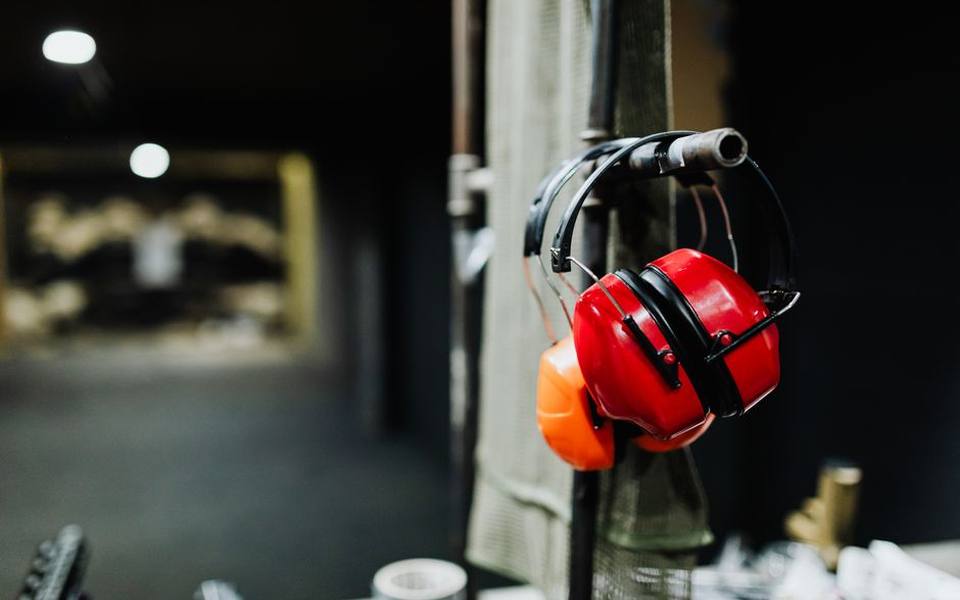
Shooters often wonder whether bargain utility muffs found at home improvement chains—such as basic Harbor Freight ear muffs or utility-grade Honeywell earmuffs—are adequate for target practice. Industrial safety earmuffs are engineered primarily to mitigate continuous, drone-like factory noise rather than high-amplitude ballistic shockwaves. While a general-purpose Honeywell or utility muff carrying a rating of 25 to 30 decibels will physically attenuate gunfire, their bulky cup profiles often make establishing a clean cheek weld on a shotgun or rifle stock extraordinarily frustrating.
Dedicated shooting designs taper the lower half of each ear cup specifically to clear rifle comb height and shotgun stocks. General hardware options often push the earmuff off the head when you mount a long gun, breaking the acoustic seal exactly when you press the trigger. If you choose passive cups, verify that the acoustic seal remains unbroken during your natural mount, or keep those wide utility cups reserved strictly for handgun shooting.
Traditional Foam Plugs and Threaded Canal Inserts
Disposable foam earplugs remain the most accessible hearing PPE in shooting bags worldwide, yet they are frequently inserted incorrectly. When rolled down into a tight, crease-free cylinder, inserted deep into the canal while pulling the outer ear upward, and allowed to expand fully, premium foam can achieve an impressive 30 to 33 decibels of nominal attenuation. However, loose insertion in the outer concha drops actual real-world protection down to single digits, leaving the inner ear vulnerable to acoustic shock.
To combat the inconsistency of rolling foam with dirty range fingers, many shooters turn to rigid-stem designs and threaded foam plugs, such as Skull Screws earplugs. These models feature a soft, screw-threaded foam tip mounted on a semi-rigid core, allowing the user to gently twist the plug directly into the ear canal without rolling the material beforehand. The directional threading helps create an exceptionally tight mechanical seal against the canal wall, ensuring reliable depth even for users with narrow or tortuous ear canals.
Flanged silicone reusable plugs offer another practical in-ear option, particularly for warm outdoor days when foam absorbs sweat and loses its compressive rebound. While reusable silicone plugs are easy to wash with soap and water after a dusty session, they generally yield slightly lower laboratory ratings than properly inserted deep foam. Maintaining several fresh pairs of high-attenuation inserts ensures you always have a baseline layer of safety ready for range guests or backup use.
How Electronic Earmuffs Balance Amplification and Blast Protection
Electronic earmuffs have revolutionized range safety over the past two decades by bridging the gap between acoustic protection and situational awareness. These systems utilize external omnidirectional microphones to capture ambient sound—such as range commands, normal conversation, and rustling footsteps—and replay that audio through internal speakers at safe volume levels. When an impulse noise exceeding 82 decibels occurs, the internal circuitry instantly suppresses the sound transmission, allowing only the attenuated shell of the muff to reach the shooter's ears.
Early electronic earmuffs utilized analog clipping circuits, which abruptly cut audio off completely whenever a shot was fired, resulting in a jarring, staccato silence during rapid fire. Modern active designs, popularized by platforms like Walker's hearing systems, employ advanced sound-activated compression. Rather than shutting audio down entirely, digital compression instantly compresses loud impulse peaks down to safe decibel levels while continuously streaming lower-level speech, keeping communication clear even on busy public firing lines.
This constant auditory feedback fundamentally improves safety during training courses. Instructors and students can converse at normal vocal volumes without shouting or lifting an ear cup to listen. Being able to hear range commands, cease-fire calls, and mechanical cycling sounds while staying completely protected from high-velocity blasts makes electronic headsets the modern standard for defensive drills and tactical training.
Slimline Electronic Range Classics and Battery Management
Among low-profile electronic headsets, slim-cup models like the Howard Leight Impact Sport electronic earmuff have set the standard for everyday range use. Featuring deeply undercut lower cups, an integrated steel-wire headband, and an easy rotary volume wheel, these slimline designs allow rifle shooters to mount comb risers and tactical stocks without knocking the headset loose. Their compact folding layout allows them to tuck neatly into ammo cans or range bags without consuming excessive space.
Power management is an essential operational detail that many shooters overlook until their headset goes dead mid-drill. Most classic electronic muffs operate on standard AAA alkaline cells, but battery longevity varies depending on ambient temperature and volume settings. An automatic shut-off feature helps preserve your Howard Leight Impact Sport battery if you accidentally leave the headset turned on inside your gear bag, but keeping spare cells inside your field kit prevents unwanted surprises during all-day classes.
Corrosion from leaking alkaline batteries is the leading cause of premature electronic headset failure. If you store your shooting gear in an unconditioned garage, vehicle trunk, or damp basement between trips, standard alkaline cells can vent corrosive acid that ruins the internal battery terminals. Experienced shooters often swap to premium lithium AAA batteries, which resist temperature extremes and will not leak inside delicate electronic compartments during seasonal storage.
Tactical Electronic Ear Buds and In-Ear Digital Modules
While over-ear muffs are convenient, they can become uncomfortably hot during summer matches and can interfere with cheek welds on precision rifles. In response, tactical electronic ear buds, such as rechargeable Peltor ear buds, have become prominent among competitive practical shooters and dynamic action competitors. These miniature units fit entirely inside the ear canal, combining high-grade foam or silicone eartips with micro-electronic amplification and digital impulse damping.
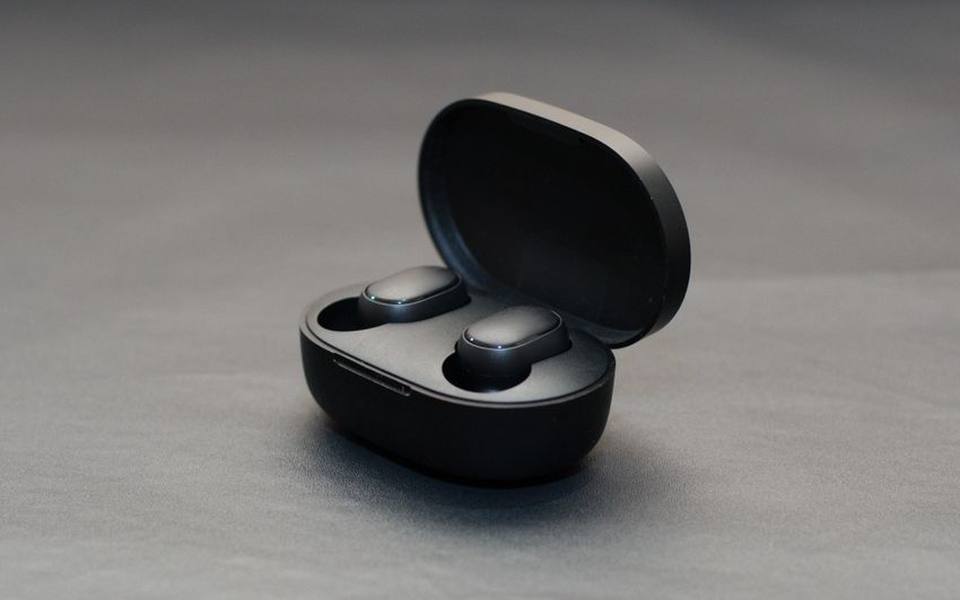
Tactical in-ear buds eliminate the bulk of traditional headbands entirely, allowing seamless integration with tactical helmets, wide-brim sun hats, and ballistic eyewear. Because there is no external cup pressing against your skull, you avoid the painful temple pressure that thick glasses frames often cause beneath heavy earmuff cushions. Most premium electronic buds come housed in rugged, pocket-sized charging cases that provide multiple recharges in the field via USB connections.
The primary tradeoff with in-ear electronic buds centers on fitment precision and wind turbulence. If the chosen eartip does not establish an airtight seal within your canal, the unit will fail to attenuate loud gunfire properly. Furthermore, open outdoor environments with stiff crosswinds can generate microphone whistle across tiny external mic ports, though high-end models incorporate foam wind screens and algorithmic digital filtering to keep incoming audio intelligible.
Custom-Molded Digital Ear Protection for High-Volume Shooters
For avid clay target competitors, bird hunters, and shooting instructors who spend hundreds of hours a year on the line, universal-fit eartips often cause ear canal fatigue. Custom-molded digital hearing devices, exemplified by platforms like Starkey SoundGear, represent the pinnacle of comfort and acoustic performance. These instruments require physical silicone impressions taken of the shooter's unique ear canal anatomy, resulting in medical-grade acrylic or silicone shells tailored perfectly to the individual ear.
Inside these custom shells, advanced digital sound processors analyze the acoustic environment across multiple frequency channels. Unlike entry-level electronic muffs that apply blanket amplification, medical-grade digital modules can be programmed to compensate for an individual shooter's existing high-frequency hearing loss while instantaneously capping gunshot decibels. This dynamic processing delivers pristine natural sound fidelity, making ambient footsteps and distant clay launcher traps sound exactly as they would to an unassisted ear.
Custom electronic in-ear protection requires a noticeable initial investment, but the return in all-day comfort is unmatched. When properly fabricated, custom units will not slide loose during heavy perspiration, will not snag on gun slings, and create an acoustic seal that remains completely stable regardless of facial movement or jaw repositioning while calling for targets on the sporting clays course.
Hunting Game Ears and Situational Tracking in the Field
Traditional hunters historically avoided hearing protection because passive muffs prevented them from hearing approaching game, subtle brush movements, or vocalizing waterfowl. This neglect resulted in widespread high-frequency hearing deficits among long-time sportsmen. Modern hunting game ears have changed this dynamic entirely by delivering high-gain directional amplification designed specifically to track subtle sounds in open woodlands and brush.
Quality hunting audio systems feature dual or quad directional microphones that allow your brain to accurately triangulate the location of approaching quarry. Whether listening for a whitetail deer stepping through dry leaves or an elk bugling across a canyon, these devices enhance human auditory range while standing guard against the deafening muzzle blast of a magnum rifle or turkey shotgun. If your hunt involves threaded barrels, visiting Class 3 / NFA Dealers can also help you explore muzzle suppressors that complement field electronic ears.
Weather resistance is paramount when selecting game ears for hunting duty. Unlike sterile indoor firing lanes, field use exposes your gear to freezing drizzle, blowing snow, and heavy brush snagging. Look for units with sealed microphone membranes, water-repellent nano-coatings, and low-profile form factors that remain completely quiet when rubbing against hunting jacket collars, beanies, or camouflage face masks.
Indoor Ranges, Muzzle Brakes, and Doubling Up Protection
Indoor firing ranges present an exceptionally harsh acoustic environment compared to open fields. Hard concrete walls, steel target baffles, and solid floor surfaces reflect sound energy back toward the shooter, significantly prolonging the reverberation time of each blast. When firing next to a short-barreled rifle or a pistol equipped with an aggressive muzzle brake, localized sound pressure can easily overwhelm standard slimline earmuffs with modest ratings.
In these punishing conditions, experienced shooters rely on the technique known as doubling up: inserting high-attenuation foam or flanged plugs directly into the ear canals, then donning a set of quality electronic earmuffs over top. By turning the volume on the electronic muffs up to near maximum, speech and range commands pass through the external microphones and are transmitted cleanly through the foam inserts, while the combined physical layers offer exceptional total blast reduction.
Doubling up provides critical safety margins during intensive training sessions or indoor testing of custom cartridges. Shooters who spend time at Gun Stores with Reloading Supplies developing maximum-pressure rifle recipes frequently encounter heavy muzzle concussion on the bench. Combining in-ear plugs with full-sized over-ear cups is the most reliable method to eliminate the concussive fatigue that causes flinching and degraded marksmanship.
Gel Pads, Eyewear Seals, and Headset Maintenance Upgrades
The effectiveness of any over-ear hearing protector depends entirely on the integrity of the acoustic seal around your ears. Standard factory earmuffs typically come fitted with vinyl-wrapped foam cushions that can feel stiff against the skull. When worn over thick plastic eyewear frames, these vinyl cushions bridge over the temples, creating small air gaps that allow direct acoustic leaks, potentially reducing the muff's actual protection by 5 to 10 decibels.
Upgrading to aftermarket silicone gel ear pads is one of the most effective modifications you can make to your range gear. Silicone gel cushions are far softer and more compliant than standard foam, molding seamlessly around glasses frames and bone contours to maintain an airtight acoustic seal. Furthermore, gel cushions disperse clamping force evenly, eliminating the painful pressure headaches that often develop during multi-hour shooting courses.
Maintaining your hearing PPE requires minimal effort but delivers substantial longevity. Regularly inspect your ear cushions for hardening, cracking, or tears, replacing them with factory hygiene kits once or twice a year depending on range frequency. If you notice strange rattling in your receiver or plan to consult Gunsmiths regarding muzzle device tuning, pairing comfortable, well-maintained ear protection ensures you stay focused on safe gun handling rather than painful equipment.
Selecting the Optimal Hearing Protection for Your Discipline
Every shooting discipline places different mechanical and ergonomic demands on your hearing equipment. Clay target shooters require a featherweight profile and unobstructed cheek weld to track erratic flying targets without stock interference. Tactical carbine shooters require dynamic compression to hear instructor feedback while moving through shoot houses. Handgun competitors often prioritize maximum passive attenuation combined with active compression to conquer loud indoor bays.
Before purchasing your next setup, take inventory of where you shoot most frequently. If your budget is modest, pairing deep-fit foam plugs with dependable slimline electronic muffs gives you maximum versatility across both indoor lanes and outdoor berms. Those who frequent local shops or browse Used Gun Stores for classic hunting long guns may prefer the natural cheek placement offered by discrete electronic in-ear buds or molded plugs.
Hearing damage is permanent, cumulative, and entirely preventable. Whether you choose entry-level passive muffs, field-proven electronic headsets, or custom-fit digital canal inserts, prioritizing consistent use and a perfect acoustic seal will protect your auditory health for a lifetime of shooting sports. Always test your fit at home before heading to the firing line to confirm complete comfort and uncompromised safety.
Published 2026-09-21 · reviewed with each rebuild, last September 2026.
Find gun stores near you
The directory lists 12,328 gun stores by state and city — pick your state or use the “Near me” button in the header.
More guides
-
 Buying
Night Vision, Caliber Choices, and Hearing Protection: The Practical Buyer Guide
-
 Owning
Muzzle Brakes vs Pistol Compensators: Mechanics, Tuning, and Ownership Costs
-
 Owning
Where to Get Fingerprints for Gun Permits, Hearing Gear, and Range Prep
-
 Owning
How to Remove Rust from a Gun Safely Without Damaging the Finish
-
 Buying
Choosing a Skeet Shotgun: Balance, Gauges, and Barrel Specs
-
 Safety
Stun Guns, Tasers, and Protective Range Gear: Practical Buyer's Guide
-
 Buying
Choosing Practical Firearms for Home Defense and Daily Carry
-
 Buying
FFL Transfer Fees and Process Explained: What to Expect at the Counter
-
 Service
Fingerprinting Services, IdentoGO, and FBI Background Checks: The Complete Guide
-
 Safety
Indoor and Outdoor Shooting Ranges: Etiquette, Rules, and Memberships
-
 Storage
Gun Safes and Fireproof Storage: Biometric Safes, Cabinets, and Dehumidifiers
-
 Safety
Body Armor and Ballistic Plates: Threat Levels, Plate Materials, and Carrier Sizing
-
 Safety
Shooting Hearing Protection: Electronic Earmuffs, Custom Earplugs, and Noise Reduction
-
 Owning
Shooting Targets, Clay Throwers, and Range Rests Guide
-
 Owning
Concealed Carry Holsters: Kydex, Leather, IWB, OWB, and Specialized Rigs
-
 Owning
Rifle and Shotgun Slings: Single-Point, Two-Point, and Mounting Hardware
-
 Owning
Everyday Carry and Tactical Accessories: Range Bags, Gun Locks, and Practical Gear
-
 Owning
Gun Cleaning Kits and Maintenance: Cleaners, Oils, and Solvents
-
Safety
Everyday and Noise Reduction Earplugs: A Practical Comparison Guide
-
 Safety
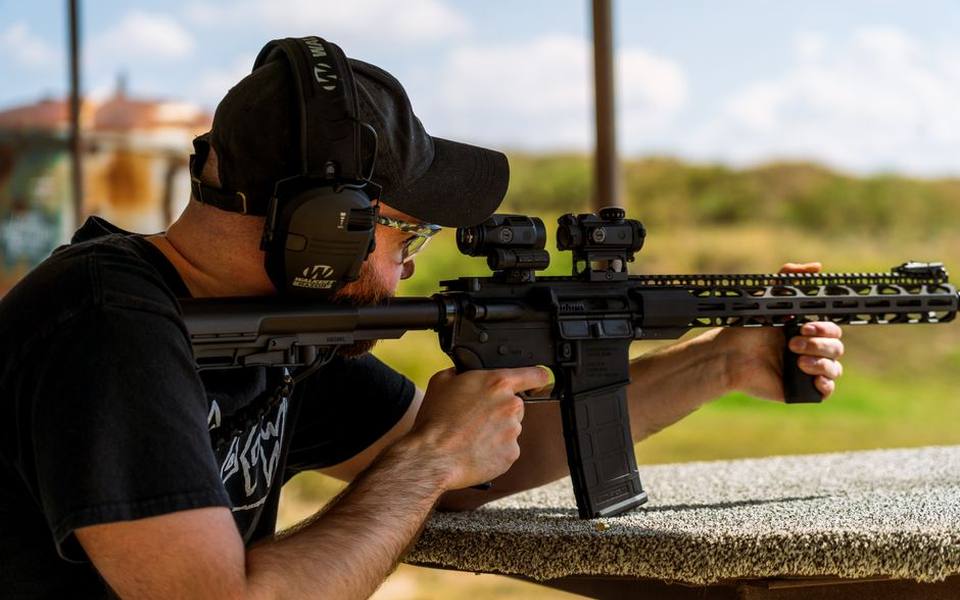
Firearm Safety Rules, Concealed Carry Courses, and Tactical Shooter Training
-
 Service
Rifle Customization, Caliber Selection, and Bench Work: A Guide to Practical Gunsmithing and Reloading
-
 Safety
Shooting and Hearing Protection: Guide to Earmuffs, Plugs, and Electronic Defenders
-
 Buying
Choosing Spotting Scopes, Binoculars, and Specialized Night Optics
-
 Safety
Active Shooter Response, Tactical Handgun Courses, and Firearm Safety Training Guide
-
 Buying
Night Vision Optics and Spotting Scopes Buyer's Guide
-
 Buying
Firearm Valuation, Appraisal, and Used Buying Guide
-
Safety
Layering Personal Defense: Less-Lethal Tools, Purpose-Built Firearms, and Medical Gear
-
 Buying
Hunting Ammunition, Calibers & Reloading Supplies Guide
-
 Owning
Concealed Carry Reciprocity, Licensing Basics, and Buying Regulations Explained
-
 Service
Custom Gunsmithing, Barrel Modifications, and AR-15 Upgrades Guide
-
 Owning
Target Shooting & Clay Sports Guide: Air Rifles, Ranges & Eye Protection
-
Storage
Essential Firearm Storage, Cases, Recoil Pads, and Rig Systems
-
 Owning
Dry Fire Training Systems, Timers, and At-Home Practice Routines
-
 Owning
State Firearm Rules, Training Courses, and Range Guidelines
-
Owning
Essential Tactical Gear, EDC Equipment, Shooting Gloves, and Range Bags
-
 Owning
Everyday Carry Holsters and Wearable Gear: A Practical Selection Guide
-
 Owning
Firearm Upgrades and Tuning: Gas Blocks, Sights, and Mounts
-
 Owning
CCW Permits, Licensing Laws, and Background Check Fingerprinting Guide
-
 Storage
Firearm Safes and Secure Storage: Humidity Control, Security Standards, and Storage Solutions